

The comparison
The comparison as Page Builder Sandwich wrote it.
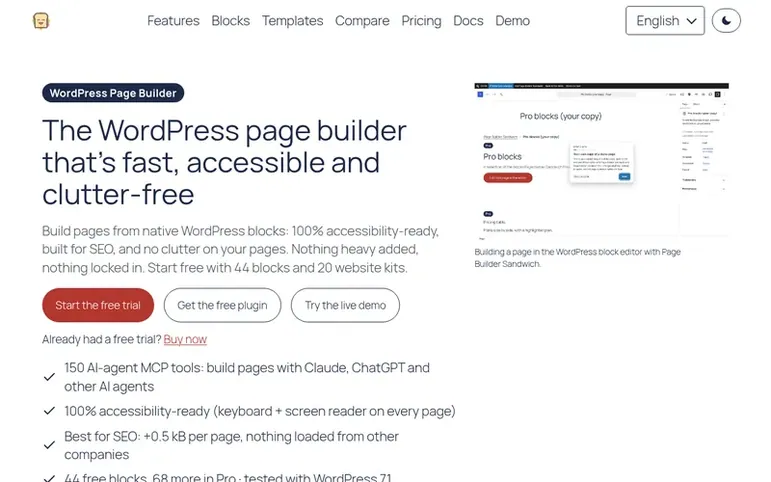
Page Builder Sandwich works within WordPress's block editor, or in its own full-screen editor, and stores plain blocks. That keeps pages lighter and readable even if the plugin is removed. Elementor takes a different route: it swaps the WordPress editor for its own drag-and-drop canvas.
- Page Builder Sandwich's strengths
Every page is stored as standard WordPress blocks, so no single builder holds your content captive.
Tested on one identical page, it added +0.5 kB and made no requests to outside servers, whereas the free Elementor plugin added +156.4 kB plus 3 requests to servers belonging to other companies.
An accessibility checker comes included in the free plugin.
Pro turns Elementor pages into blocks while leaving the original page untouched.
- Elementor's strengths

Elementor offers a live visual drag-and-drop canvas with wide recognition among people who use WordPress.
Its sizeable free plugin comes with many widgets covering headings, images, buttons and galleries.
- Shared ground
Each one is a visual page builder for WordPress, offering a free plugin alongside paid plans.
Each provides routes for AI tools to work on a website.
- Differences
Elementor does its work away from the block editor, whereas Page Builder Sandwich operates within that editor.
For each page, Page Builder Sandwich brings in just the styles for the blocks used there, served from your own site.
Its MCP server hands AI agents like Claude 150 tools, restricted by the permissions your WordPress account has.
